Your Guide to Complexion Product Matching
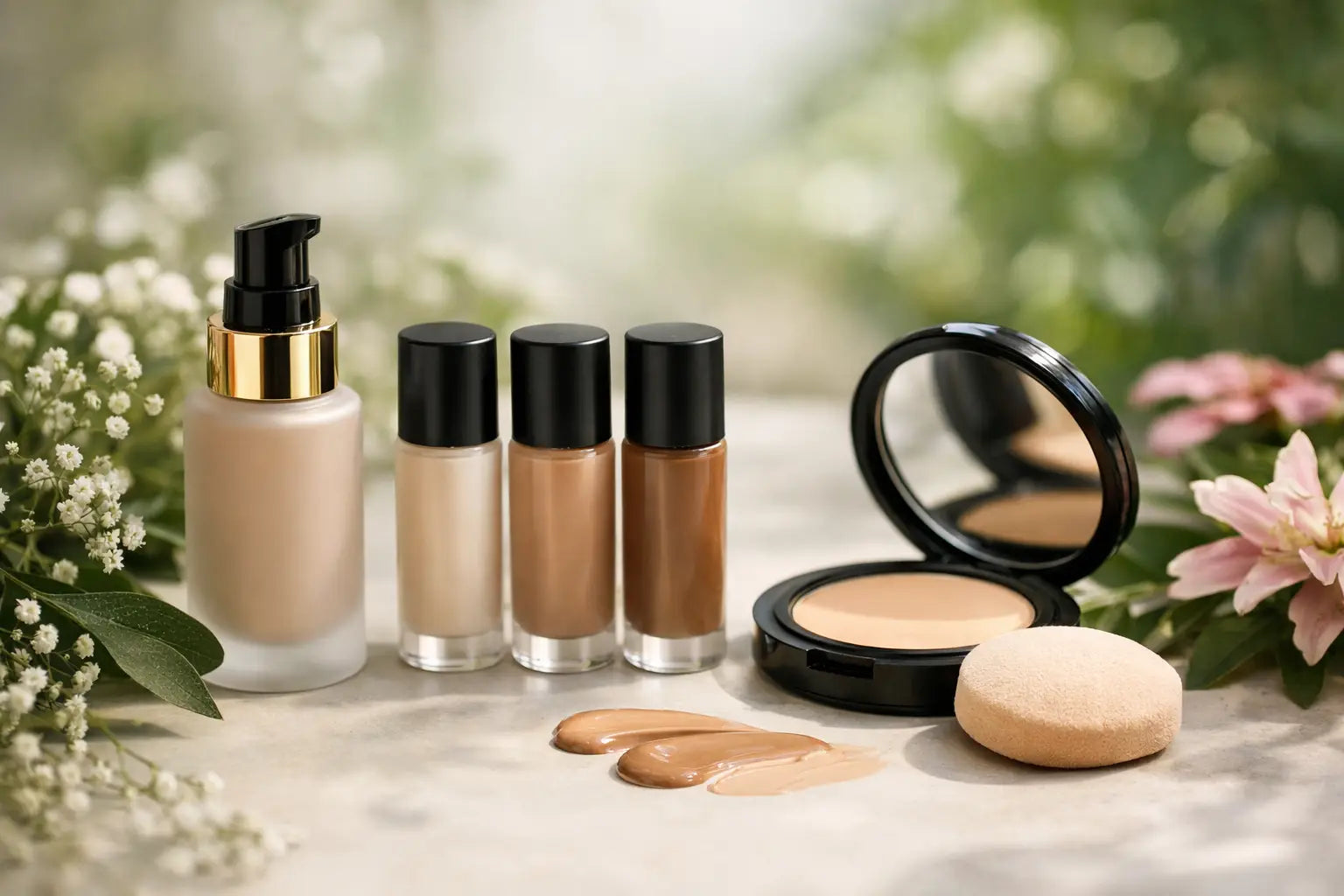
The right complexion should look like your skin on its best day - rested, even, luminous and entirely believable. Yet a foundation that looked perfect in a swatch can turn too warm, too flat or too heavy once it meets your face. This guide to complexion product matching takes the guesswork out of choosing your shade, coverage and finish, so your makeup enhances your complexion rather than sitting on top of it.
Start with skin tone, then find your undertone
Skin tone is the depth of your complexion: fair, light, medium, tan, deep or somewhere in between. Undertone is the subtle cast beneath the surface of your skin, and it is usually the reason a shade can look slightly off even when its depth seems right.
Warm undertones lean golden, peachy or yellow. Cool undertones lean rosy, pink or blue. Neutral undertones sit between the two, often looking balanced rather than distinctly pink or golden. Olive skin can have a green-grey or golden-green cast, and may need a neutral or olive-leaning shade rather than a strongly warm foundation.
A quick look at the veins on your wrist can offer a clue, but it is not the final verdict. Green-looking veins may suggest warm or olive undertones, while blue or purple veins can suggest cool. The more reliable test is to hold a few shades along your jawline and see which one appears to melt away into both your face and neck.
Why the jawline is the only swatch that matters
Your hand is often a different shade to your face thanks to sun exposure, regular washing and everyday life. Testing foundation there is tempting, but it can lead to a mismatch that becomes obvious in daylight.
Apply two or three close shades in slim vertical stripes from the cheek to the neck. Let them settle for five to ten minutes, particularly if you have oily skin or are trying a long-wear formula. The best match should disappear across the jawline without leaving a pink, orange, yellow or ashy border.
If you wear SPF daily, use active skincare or have pigmentation, your face may be deeper or lighter than your neck. In this case, match your foundation to your neck and upper chest for a more harmonious result, then use bronzer and blush to restore warmth and dimension.
Match coverage to what you want to see, not hide
Full coverage is not automatically more flattering, particularly on mature, dry or textured skin. More pigment can be useful for significant redness, dark spots or an occasion where you want polished longevity. But if it is applied too heavily, it may settle into fine lines and make natural texture more noticeable.
Sheer to medium coverage is often the sweet spot for real-life makeup. It evens the complexion while allowing skin to remain skin. Build coverage only where you need it - around the nose, through redness, over pigmentation or at the centre of the face - rather than applying a thick layer everywhere.
Think of foundation as your overall veil of correction. Concealer is your precision tool. A small amount of concealer at the inner corner of the eye, beside the nostrils or over a stubborn mark can create a fresher finish than another layer of foundation ever could.
Foundation and concealer do not need to be identical
For blemishes and redness, choose a concealer that closely matches your foundation. This keeps the correction invisible and avoids creating pale dots over the skin.
For under-eyes, a concealer that is around half a shade to one shade lighter can brighten the area without giving a stark, mask-like effect. If dark circles are blue, purple or brown, a peach or apricot corrector underneath may be more effective than continually layering a light concealer.
The goal is not to erase every shadow. A little natural depth around the eyes keeps the face dimensional, while a well-matched concealer makes you look more awake, not overdone.
Choose a finish that respects your skin texture
Finish changes how a complexion product behaves and how it is perceived. Dewy formulas reflect light, giving dry or lacklustre skin a hydrated, plumper appearance. Natural or satin finishes offer a balanced skin-like result, making them an excellent choice for most skin types. Matte finishes can help control shine, but an overly powdery matte base may emphasise dryness around the mouth and eyes.
If your skin is combination, you do not have to choose one finish for your entire face. Use a natural, hydrating base, then lightly set only the areas that become shiny, usually the sides of the nose, chin and centre of the forehead. Leaving the cheeks with a soft skin sheen looks fresher and avoids flattening the face.
For mature skin, prep is part of matching. Dehydration can make even a beautiful shade look patchy or darker in areas where it catches on dry skin. Allow moisturiser and SPF to settle before makeup, then press product into the skin in thin layers. A luminous finish is not about glitter or shine - it is about light meeting a hydrated, smooth-looking surface.
Consider how your shade changes through the year
Australian sunshine can change your complexion quickly, even if you are diligent with SPF. You may need a deeper foundation in summer and a lighter match in winter, especially if you spend time outdoors, travel often or wear your face and neck differently covered.
Rather than forcing one shade to work year-round, keep two adjacent shades and adjust your mix as needed. This gives you control over depth without compromising undertone. If your winter foundation is neutral, choose a summer shade with the same neutral direction rather than jumping to a much warmer tone.
Your preferred finish can shift with the seasons too. A formula that feels perfect through humid weather may feel less comfortable when heaters, wind and cooler temperatures leave skin dehydrated. Let your skin’s current condition guide the amount you apply, how you prep and where you set it.
Apply it in a way that reveals the real match
The same foundation can look completely different depending on application. Fingers warm product and work well for a light, natural layer. A damp sponge gives a diffused, polished finish and is ideal when you want to press product over texture rather than drag it. A dense brush can offer more coverage, though it is best used with a light hand so pigment does not gather in pores or fine lines.
Begin at the centre of the face, where most people have redness or unevenness, and blend outwards. Keep the perimeter of the face lighter. This is especially flattering if your chosen shade is a fraction deeper than your neck, and it prevents a visible makeup line at the hairline or jaw.
Before deciding a product is not your match, check these four details:
- View it in natural daylight as well as bathroom lighting.
- Give it time to settle before judging the undertone.
- Check whether skincare, sunscreen or primer is causing separation.
- Assess it from a normal conversation distance, not only under a magnifying mirror.
When your foundation is close, but not quite right
If a shade is a little too light, avoid trying to fix it with heavy bronzer. Bronzer is designed to add warmth and dimension, not alter the foundation’s overall depth. Mixing in a small amount of a deeper shade is more convincing.
If a shade is too warm, blend it with a neutral or cooler match rather than masking it with powder. If it is too cool or pink, a warm or golden mixer can bring it back into balance. The best result often sits between two shades, which is why swatching adjacent options matters.
When a foundation looks grey or dull, the issue may be undertone, but it can also be dehydration or too much product. Try a thinner layer over well-moisturised skin first. If the cast remains, move towards a warmer, neutral or olive-friendly option depending on what your jawline swatch reveals.
Mirenesse complexion products are created for real beauties who want luxe clean performance without a complicated routine. Take your time with the jawline test, choose a finish that makes your skin feel comfortable, and let your base work with your features. The most beautiful match is the one that lets people notice you first - not your foundation.