How to Cover Redness Naturally With Makeup
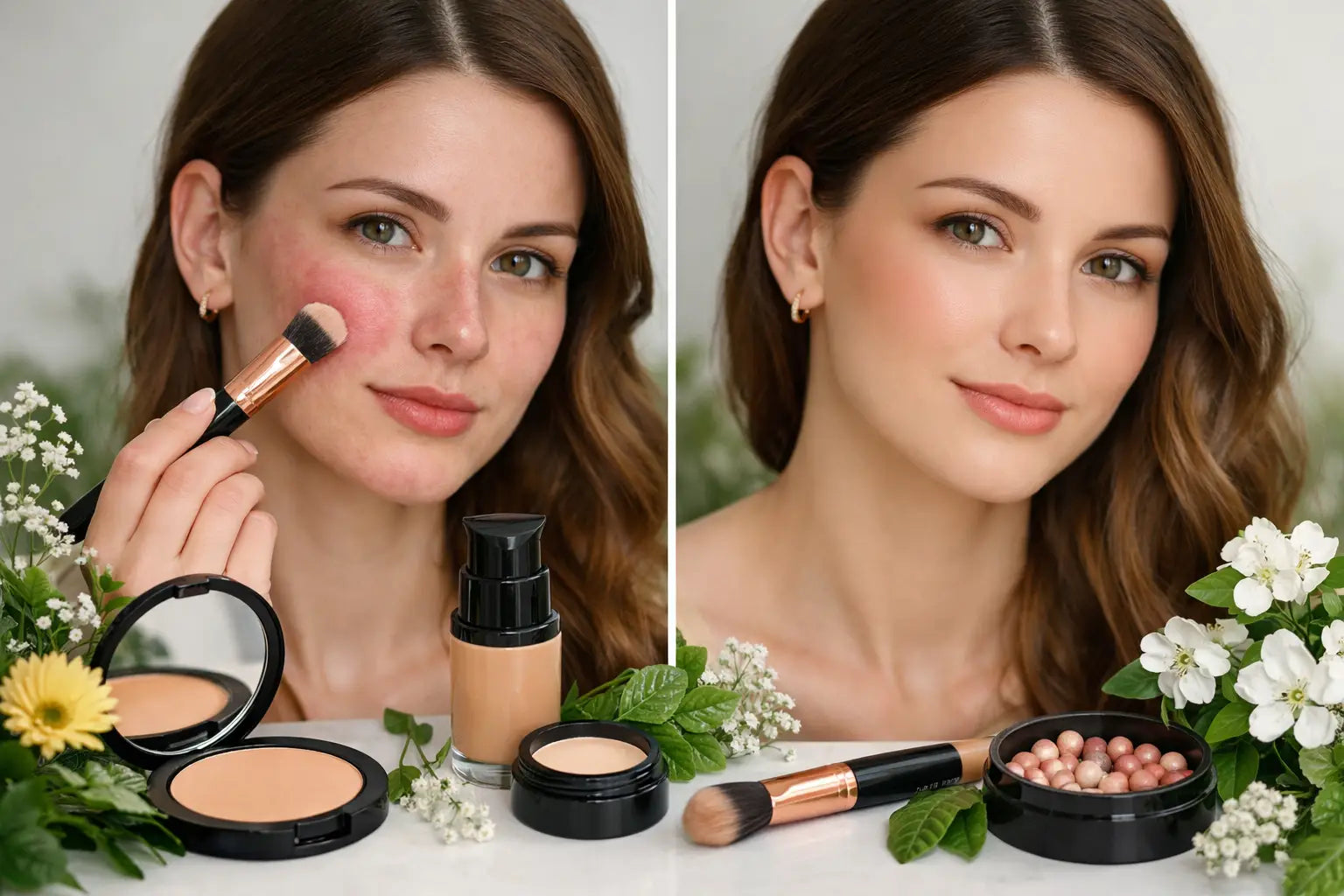
Redness has a way of stealing the spotlight, whether it appears around the nose, across the cheeks, over a blemish or on skin that suddenly feels reactive. Knowing how to cover redness naturally is not about creating a thick mask. It is about calming the look of uneven tone, letting real skin show through and choosing makeup that stays flattering as the day goes on.
For mature skin in particular, less product and better placement usually deliver the most polished result. A luminous, even-looking complexion feels far more luxe than a heavy base settling into fine lines or catching on dry patches.
Start with skin that feels comfortable
Makeup sits beautifully when skin is hydrated, not overloaded. Redness can look more obvious when the complexion is dry, tight or flaky, so begin with a gentle routine that supports moisture rather than stripping it away. Apply a lightweight hydrating serum or moisturiser, then give it a minute to settle before makeup.
If you are prone to visible flushing, avoid vigorously rubbing your face with a towel or applying several active skincare products immediately before your base. Friction, heat and too many layers can make the skin look temporarily redder. Press product in with clean hands instead.
A smoothing primer can be helpful, especially if redness comes with enlarged-looking pores or texture. Choose a comfortable, flexible formula and apply only where you need it. The goal is a soft, even canvas, not a slippery layer that makes complexion makeup move by lunchtime.
Treat sudden or persistent redness with care
Makeup can beautifully soften the appearance of redness, but it cannot diagnose the cause. If redness is persistent, itchy, painful, scaly or accompanied by stinging, speak with a pharmacist, GP or dermatologist. Rosacea, dermatitis, allergies and irritation need thoughtful care, and piling on concealer is not the answer.
Use colour correction with a light hand
The colour wheel is your secret weapon here. Green helps visually neutralise red tones, while a muted yellow-toned corrector can be flattering on mild diffuse redness, depending on your skin tone. The trick is using the tiniest amount possible.
Dot green corrector only onto the areas that look red: often the sides of the nose, centre of the cheeks, chin or a fresh blemish. Then gently press and tap until the green almost disappears. If you can clearly see a green cast before foundation, there is too much on the skin.
For deeper complexions, redness may show as a richer red-brown, violet or uneven warmth rather than bright pink. A green corrector can still work, but test it first. In some cases, a golden, yellow or warm peach-toned complexion product gives a more natural-looking balance than a pale green formula.
How to cover redness naturally without masking your skin
Choose a complexion product with a natural, skin-like finish and build it in thin layers. Full coverage is not automatically the best coverage. A formula that looks fresh and flexible is often more effective because it does not crack, separate or settle into expression lines as the day wears on.
Start at the centre of the face where redness is usually strongest. Use a dense complexion brush, sponge or clean fingertips to press product onto the skin, then blend outward toward the hairline and jaw. Pressing gives more coverage than sweeping and is kinder to dry or sensitive-looking areas.
Once your first layer is blended, step back from the mirror. You may find that the cheeks look even, but the nose and chin need a little more. Add a second whisper-thin layer only in those zones. This targeted approach keeps your complexion dimensional and avoids that flat, overdone finish.
A skin tint suits light, occasional redness and those who love a sheer, dewy look. A medium-coverage foundation is often the sweet spot for redness that is more widespread. For a stubborn blemish or broken capillary, use a creamy concealer after foundation instead of adding more base everywhere.
Match undertone, not just depth
A foundation that is too pink can exaggerate visible redness, while one that is too yellow or orange can look disconnected from the neck. Look for a true neutral, neutral-golden or olive-leaning undertone that balances your complexion without changing your skin colour.
Always check your shade along the jawline in natural daylight where possible. Department-store lighting and bathroom globes can be deceptive. The right match should disappear into both the face and neck, leaving the skin more even rather than noticeably coated.
Conceal strategically, then set only where needed
After foundation, use a small brush to place concealer directly over any remaining redness. Let it sit for a few seconds, then tap the edges into the base so there is no obvious circle of product. This is particularly effective around the nostrils, on the chin and over individual spots.
Set redness-prone areas with a fine, translucent powder only if you need longer wear. A fluffy brush and a feather-light touch are enough. Powdering the entire face heavily can dull a natural finish and make mature skin look dry, especially through the cheeks and under-eyes.
If you prefer a glow, leave the high points of the cheeks mostly powder-free. A cream blush in a soft peach, warm rose or muted berry can bring life back to the complexion without drawing attention to redness. Very bright pink or red blush can be gorgeous, but it may make active cheek redness harder to distinguish. Placement matters too: lift blush slightly above the area where you are most red rather than blending it straight across the centre of the cheeks.
Keep the rest of the look softly balanced
When skin is red, a polished brow, defined lashes and a flattering lip can shift the focus to your favourite features. It is not about distracting from your face. It is about creating a finished look that feels intentional and confident.
A tubing mascara is especially useful on long days because it gives clean definition without the risk of dark smudges under the eyes. Pair it with softly sculpted brows and a creamy nude, rose or berry lip according to your colouring. These simple details make an even complexion look elegant rather than overworked.
For a complete routine, choose clean, high-performance formulas that feel comfortable on the skin and are easy to layer. Mirenesse was built around problem-solving beauty, because glamour should never require a complicated routine or a compromise on how your makeup feels.
Common mistakes that make redness look more noticeable
The most common mistake is applying too much green corrector or too much foundation at once. Both can leave skin looking grey, flat or textured. Build coverage gradually and remember that a touch of natural skin showing through is what makes makeup believable.
Another is choosing a matte formula when your skin is dehydrated. Matte makeup is not wrong, but it depends on the finish and your skin’s needs that day. If your redness comes with dryness, a satin or natural finish generally gives a smoother, healthier-looking result.
Finally, avoid repeatedly touching up with dry powder. If makeup has separated around the nose or chin, press it back into place with a clean sponge first. Then add the smallest amount of concealer or powder only where it is needed.
Redness does not need to dictate your makeup look. A little hydration, precise colour correction and strategic coverage can let your complexion look calm, fresh and unmistakably like your own skin - on its best day.