Primer vs moisturiser before makeup
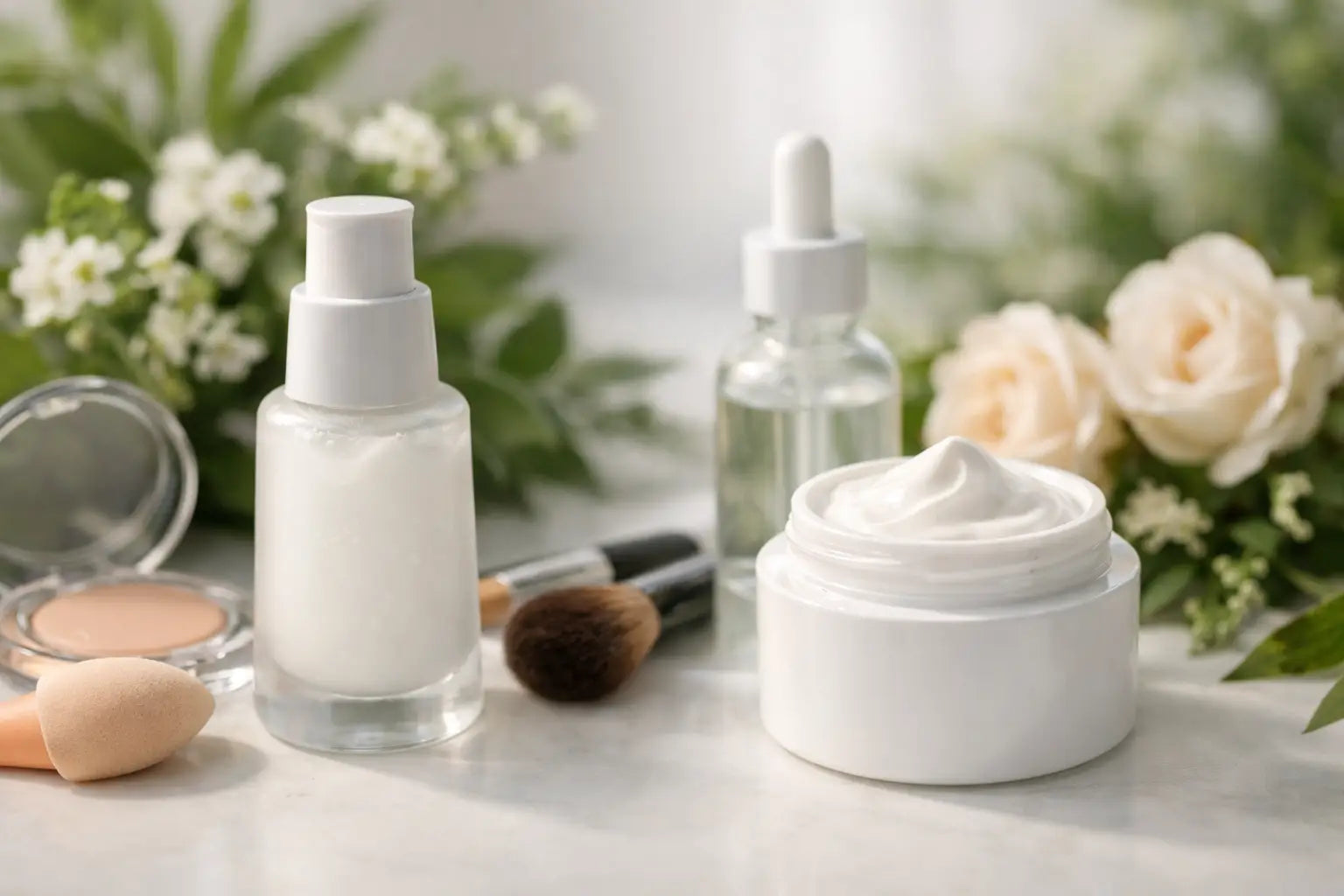
If your foundation pills by lunchtime, clings to dry patches, or seems to vanish around the nose, the question of primer vs moisturiser before makeup is not a small one. It is usually the difference between makeup that looks polished for hours and makeup that starts arguing with your skin before you have finished your second coffee.
The truth is, primer and moisturiser are not rivals. They do different jobs, and mature, dry, combination, or texture-prone skin often needs a more tailored answer than the old beauty rule of one or the other. If you want glow, grip, comfort, and longevity, it helps to know exactly what each product is bringing to the routine.
Primer vs moisturiser before makeup: what is the real difference?
Moisturiser is skincare first. Its job is to hydrate, soften, support the skin barrier, and help your complexion feel comfortable. A good moisturiser can plump the look of fine lines, reduce that tight post-cleansing feeling, and create a smoother canvas simply because healthier skin always wears makeup better.
Primer is a makeup prep product. Its role is to improve how makeup sits and how long it lasts. Depending on the formula, it may blur the look of pores, add radiance, control excess oil, grip foundation, or reduce the chance of streaking and fading.
That distinction matters. Moisturiser treats the skin. Primer prepares the surface for cosmetics. Some formulas overlap, but they are not interchangeable in every routine.
If your skin is thirsty, no amount of primer will replace proper hydration. If your makeup slips off by midday, moisturiser alone may not give you the hold you want. That is why the best answer is often not either-or, but which one first, how much, and whether your skin needs both.
Should you use moisturiser before primer?
In most cases, yes. Moisturiser usually goes on before primer because skincare should sink into the skin, while primer sits closer to the surface to help makeup perform.
Think of it this way: moisturiser feeds the canvas, primer perfects the finish. If you reverse the order, you can dilute the primer effect or cause unnecessary slipping, especially if your products are rich or silicone-heavy.
That said, technique matters just as much as order. If you apply a rich cream and then layer primer on immediately, you may get pilling or patchiness. Give your moisturiser a minute or two to absorb. The skin should feel comfortable and supple, not wet or tacky, before you move on.
For busy mornings, this is where many routines go wrong. It is not that the products are bad. It is that too much product, too quickly, creates friction under foundation.
When moisturiser alone is enough
There are days when moisturiser can absolutely do the heavy lifting. If your skin is balanced, your foundation is already hydrating, and you are only wearing a light tint or concealer, primer may be optional.
This is especially true for normal to dry skin that prefers a fresher, more skin-like finish. A well-formulated moisturiser can soften flaky areas, help makeup blend more evenly, and stop complexion products from catching around fine lines.
Minimal makeup days are another obvious case. If you are wearing a tinted SPF, a serum foundation, or just spot concealer, a moisturiser may be all the prep you need. The finish often looks more natural because there are fewer layers competing on the skin.
For mature skin, skipping primer can also be the right call when the primer formula is overly mattifying or too silicone-slick. Some primers can make the skin feel smoother at first, but emphasise dryness or texture once foundation settles. Comfort and flexibility matter more than a perfectly blurred but tight-looking finish.
When primer earns its place
Primer becomes more valuable when you need performance. If your makeup breaks apart around the T-zone, sinks into enlarged pores, or disappears by late afternoon, primer can make a visible difference.
Oily and combination skin often benefit from a targeted primer, especially through the centre of the face where shine and movement are strongest. A pore-blurring or long-wear primer can help foundation stay more even and reduce the need for constant touch-ups.
Primer also earns its place for events, long workdays, warm weather, and photography. In these situations, longevity matters. You want the makeup to hold its structure, not melt into a shiny memory by 2 pm.
For mature skin, the right primer is less about masking and more about refinement. A smoothing, hydrating, or softly luminous formula can help foundation glide over fine lines rather than catching in them. The wrong primer, though, can do the opposite. That is why formula choice matters more than marketing promises.
Primer vs moisturiser before makeup for different skin types
Dry skin usually needs moisturiser first and often benefits from primer only if the primer is hydrating or radiance-boosting. If your skin is flaky or tight, prioritise nourishment. Makeup lasts longer on comfortable skin than it does on dry skin forced into a matte finish.
Oily skin still needs moisturiser. This is where people often overcorrect. Skipping moisturiser can leave the skin dehydrated, which may trigger even more oil production. Choose a lightweight moisturiser, let it settle, then use primer where you get the most shine.
Combination skin does well with a split approach. Moisturiser all over, then primer only on the nose, chin, forehead, or anywhere makeup tends to wear off faster. You do not need to prime every square centimetre of your face.
Sensitive skin should keep things simple. Too many active ingredients, fragrance-heavy formulas, or incompatible textures can lead to redness and makeup that sits unevenly. In this case, fewer layers with better compatibility often win.
Mature skin usually needs hydration as the non-negotiable step. Primer is the add-on, not the substitute. A flexible moisturiser can soften the appearance of dehydration lines, while a carefully chosen primer adds polish and helps makeup stay elegant rather than heavy.
How to layer primer and moisturiser without pilling
One of the biggest complaints around primer vs moisturiser before makeup is pilling. Those little rolls of product are not your imagination, and they are frustrating.
Usually, pilling happens because you are using too much product, layering too quickly, or mixing formulas that do not play nicely together. A rich moisturiser with a heavy silicone primer can sometimes ball up, particularly if you rub rather than press products in.
Apply moisturiser in a light, even layer and allow it to absorb. Then use a small amount of primer, focusing on the areas that genuinely need it. Press it into the skin instead of aggressively massaging it around. Foundation should then be applied with the same restraint. More product rarely creates a better finish.
It is also worth checking your base products. Sometimes the issue is not primer or moisturiser at all, but an incompatible foundation formula on top.
Do you always need both?
No, and that is the part many beauty articles gloss over. You do not always need both. You need the right prep for the result you want.
If your priority is comfort, glow, and a natural finish, moisturiser may be enough. If your priority is long wear, pore blurring, or oil control, adding primer makes sense. If your skin is dry, textured, or showing signs of ageing, using both can be the sweet spot - provided the formulas are compatible and the layers stay light.
This is where a smarter routine beats a longer one. High-performance beauty is not about piling on products for the sake of it. It is about choosing formulas that solve a visible concern and help your makeup look expensive, fresh, and effortless.
The best way to choose between primer and moisturiser before makeup
Start with what your skin is doing without makeup. If it feels tight, dull, flaky, or lined from dehydration, moisturiser is your first fix. If your makeup slides, separates, or fades too fast, primer deserves attention.
Then look at your foundation. A dewy, skincare-rich base may need less prep underneath. A matte or long-wear formula may benefit from more deliberate layering so the finish stays smooth rather than flat.
Finally, consider where you are wearing it. For errands, school pick-up, or a casual lunch, moisturiser may be plenty. For all-day wear, special occasions, or humid weather, primer becomes much more useful.
At Mirenesse, we have always believed beauty should work hard without feeling complicated. The best base routine is the one that makes your skin look better, your makeup last longer, and your morning feel less like a guessing game.
If you are still weighing up primer vs moisturiser before makeup, start with your skin’s needs, not a trend. Hydration gives you the comfort, primer gives you the polish, and the right balance gives you that fresh, confident finish that still looks good when the day runs long.