Vegan Makeup That Performs for Mature Skin
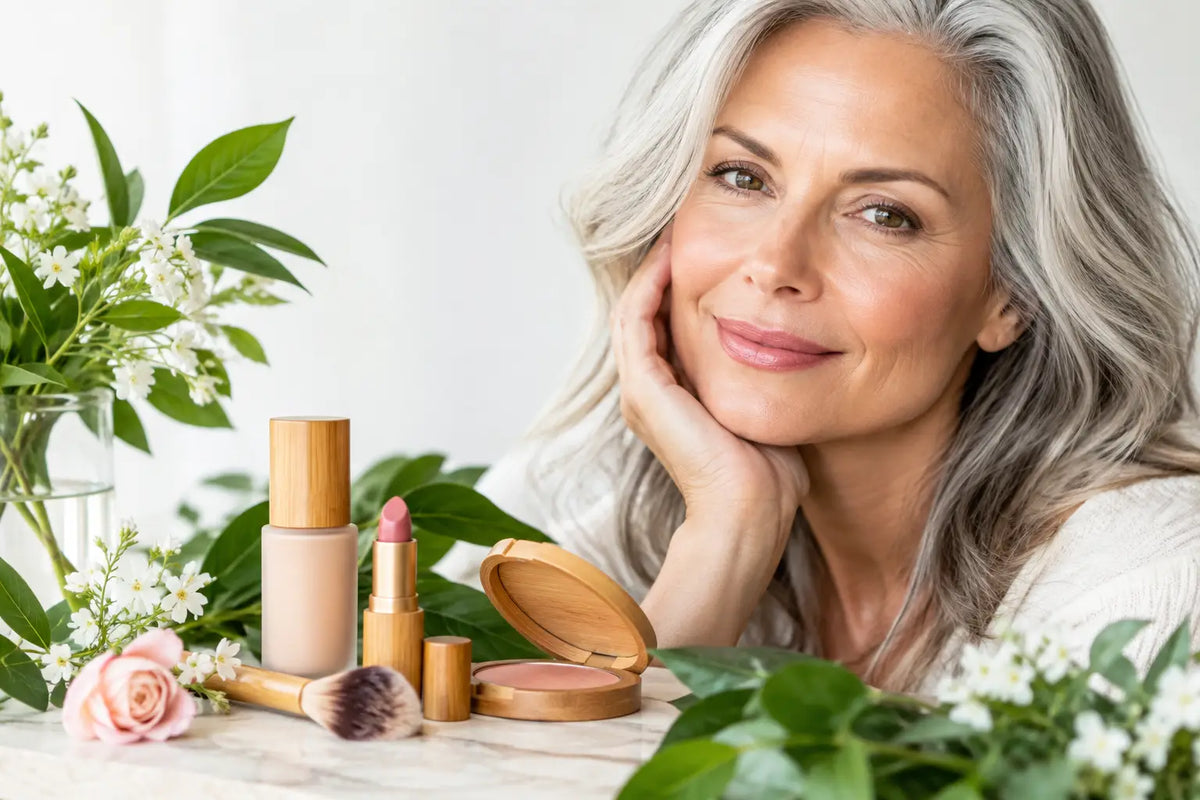
Vegan makeup is more than an ingredient label
Vegan makeup should never mean settling for sheer pigment, fussy application or a face that disappears by lunchtime. The right formulas deliver the luxe payoff you want - defined eyes, fresh-looking complexion, comfortable lips - while fitting an ethical, ingredient-conscious beauty routine.
For many women, especially as skin becomes drier, more textured or more sensitive over time, the real question is not simply whether a product is vegan. It is whether it performs beautifully on real skin. Does it glide over fine lines rather than cling to them? Will it stay put through a long day without feeling tight? Does it give you the confidence of polished makeup without a drawer full of complicated products?
That is where informed choices matter. Vegan beauty can be high-performance, glamorous and treatment-minded, but the label alone does not tell the full story.
What vegan makeup actually means
Vegan makeup is made without animal-derived ingredients. In cosmetics, those ingredients can include beeswax, lanolin, carmine, collagen, gelatine, honey and certain forms of squalane. A vegan formula replaces them with plant-derived, mineral or synthetic alternatives designed to provide slip, colour, texture and wear.
It is a meaningful distinction, but it is not the same thing as cruelty-free. Vegan refers to what is in the formula; cruelty-free refers to whether a product or its ingredients have been tested on animals. A product can be vegan without being cruelty-free, and a cruelty-free product can still contain beeswax or lanolin. If both values matter to you, look for clear confirmation of each rather than assuming one claim covers both.
Vegan also does not automatically mean natural, hypoallergenic, fragrance-free or suitable for every sensitive complexion. Nor does it guarantee a product will be clean by your own standards. Beauty claims need a closer look, particularly if you are managing dryness, redness, breakouts or changing skin through menopause.
Why formula matters more as skin changes
Mature skin is not one skin type. Some complexions become dry and less resilient, while others remain oily through the T-zone. You may have pigmentation, visible pores, expression lines or all of the above. The goal is not to cover every trace of texture. It is to choose makeup that brings light, comfort and definition back to the face.
A vegan complexion product with a flexible, moisturising texture will usually look more flattering than a heavy matte base that sets too quickly. Look for formulas that feel creamy or serum-like, offer buildable coverage and retain a natural skin finish. Strategic coverage is often more elegant than a full mask: even the centre of the face, soften the appearance of redness, then let your natural skin remain visible at the edges.
For the eye area, avoid formulas that demand too much rubbing or pulling. A smooth pencil, a fine liquid liner and a mascara that holds a curl can create instant structure without requiring a complicated technique. Tubing mascara is particularly useful for women tired of panda eyes, because it forms tiny water-resistant tubes around lashes and removes with warm water and gentle pressure rather than aggressive scrubbing.
Lips deserve the same consideration. Matte colour can look chic, but a dry formula may emphasise vertical lines and leave lips feeling parched. A creamy lip colour, nourishing balm base or comfortable satin finish often gives a more expensive-looking result while keeping colour wearable.
How to choose vegan makeup that earns its place
Start with your biggest daily beauty frustration. If mascara smudges under your eyes, the best vegan mascara for you is not necessarily the one with the most dramatic brush. It is the one that stays clean through humidity, long workdays and watery eyes. If your foundation catches on dry patches, focus on skin-prep compatibility and finish before chasing higher coverage.
Read the product description with a practical eye. Words such as long-wear, transfer-resistant, hydrating and buildable are helpful only when they align with the texture you enjoy wearing. A long-wear liquid lipstick may be ideal for a dinner out, but a creamy lip crayon may suit daily coffee runs, meetings and school pickup better. There is no prize for choosing the most intense formula if it spends the day in your handbag.
Shade selection matters just as much. For complexion products, check undertone as well as depth. A shade can look close in the tube yet turn too yellow, pink or grey once blended. Your jawline is a better testing area than the back of your hand, and natural daylight gives the most honest read. If you sit between shades, a flexible coverage formula can be more forgiving than an opaque full-coverage base.
Ingredient preferences are personal, so decide what your non-negotiables are. You might seek vegan and cruelty-free makeup, avoid particular fragrances, prefer toxin-conscious formulas or choose products that support a simpler routine. Keeping that list realistic helps you shop with confidence instead of getting distracted by every new launch.
Build a polished vegan makeup routine
A dependable routine begins with hydration. Makeup cannot replace skincare, and even an exceptional base will struggle on skin that feels dehydrated or flaky. Apply your moisturiser, allow it a moment to settle, then use a light hand with complexion products. Press rather than drag where possible, especially around the eyes and nose.
For an easy everyday face, choose a flexible base and apply only where you need it. Add cream colour to cheeks for a healthy, lifted effect, concentrating it slightly higher on the cheekbone rather than low on the face. A soft sweep of colour instantly prevents complexion makeup from looking flat.
Next, define the eyes. Curl lashes if you like that lifted look, then apply tubing mascara from root to tip with a small wiggle at the base. For extra impact, let the first coat set before adding another. A slim line close to the upper lashes makes eyes appear fuller without the heaviness of a thick graphic wing.
Finish with a lip shade that makes you feel put together. Nude tones with warmth can brighten the whole face, while a berry, rose or classic red brings instant occasion energy. If you prefer a softer edge, tap the colour on with your fingertip and build slowly.
These small choices are why multi-purpose makeup earns its place. A cream colour that works across cheeks and lips, or a mascara that gives volume without smudging, cuts down decision fatigue while keeping your routine feeling considered.
Common vegan beauty mistakes to avoid
The first mistake is treating the vegan claim as the final test of quality. Ethical formulation matters, but so do pigment, packaging, wear time, comfort and suitability for your skin. Give yourself permission to expect all of it.
The second is over-applying in an effort to make makeup last. On mature or dehydrated skin, layers of base, powder and concealer can settle into lines as the day goes on. Use thin layers, build only in areas that need more coverage, and set selectively rather than powdering your entire face.
Finally, do not confuse a tingling sensation with results. If a product stings, leaves persistent redness or makes your eyes water, stop using it. Even beautiful makeup is not worth compromising your skin barrier or eye comfort. Patch testing a new product is a sensible habit, particularly if your skin is reactive.
Beauty with standards and staying power
The most satisfying vegan makeup routine is one you genuinely look forward to using. It respects your values, works with the skin you have now and gives you the finish you want - whether that is barely-there radiance or full, glamorous definition.
Mirenesse has built its beauty authority around problem-solving, cruelty-free formulas and performance that holds up in real life, because clean, considered beauty should still feel exciting. Choose products that make getting ready easier, then wear the result with the kind of confidence no label can manufacture.