Makeup for Menopause Skin That Looks Fresh
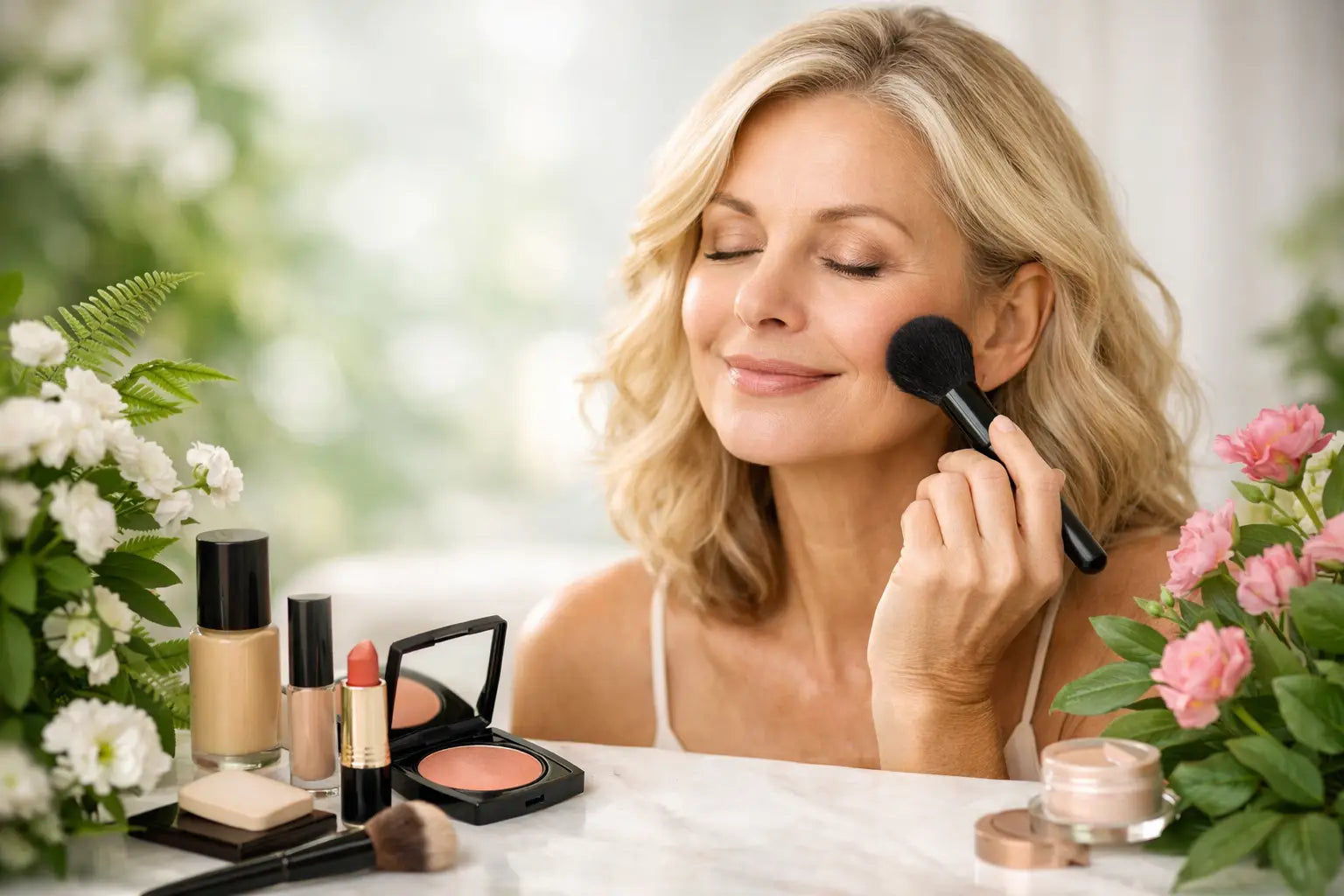
When your foundation suddenly settles into lines it never used to notice, the answer is not more coverage. Makeup for menopause skin is about working with skin that may be drier, more reactive and less naturally luminous than before - then bringing back polish, warmth and confidence with strategically placed, comfortable layers.
Menopause can change how makeup behaves almost overnight. Hormonal shifts may reduce oil production and affect hydration, while hot flushes can make a formerly reliable base separate or disappear by lunch. Texture, pigmentation, redness and softer facial contours can become more visible too. None of this calls for hiding your face. It calls for formulas and techniques that give skin the support it is asking for.
Why makeup can look different during menopause
The goal is not to chase the full-coverage finish that looks good in a filtered tutorial. On mature, changing skin, a heavy matte base often catches on dry patches, exaggerates creasing and can leave the complexion looking flat. A soft, perfected skin finish usually looks far more luxe in real life.
Your best routine may also change from day to day. On a dry day, a sheer skin tint and creamy concealer might be all you need. If redness is prominent or you are heading out in the evening, you may prefer a little more coverage through the centre of the face. Flexible products win because they let you build exactly where you need it rather than masking everything.
There is another shift worth acknowledging: skin can become more sensitive. If a product starts stinging, making you flush or creating dry, tight patches, stop trying to make it work. Choose cruelty-free, thoughtfully formulated makeup and keep the routine simple while you work out what suits your skin now.
Prep is the first step in makeup for menopause skin
Beautiful makeup starts before the first drop of foundation. Think of moisturiser as the layer that helps everything glide rather than grip. Apply your skincare, then give it a few minutes to settle. Rushing straight into complexion makeup can cause pilling and make even a beautiful formula look uneven.
For many women, a hydrating serum followed by a nourishing moisturiser is enough during the day. If skin feels particularly parched, press a small amount of facial oil over the high points after moisturiser, not all over the face. Too much slip beneath makeup can make base products travel, especially during a hot flush.
A smoothing primer can be worthwhile when pores or texture are your main concern, but it is not mandatory. The trade-off is simple: a silicone-rich primer may create a more blurred look, while a water-based, hydrating one can feel fresher on dry skin. Match the primer to your foundation where possible, and use it only where it earns its place - usually the T-zone, cheeks beside the nose or areas where makeup tends to break apart.
Choose a base that moves with your skin
Look for a liquid or serum-style complexion product with a natural, satin or radiant finish. The right shade should disappear into the jawline and chest, not merely match the centre of the face, where pigmentation and redness can make colour matching confusing. If you are between shades, choosing the closer match and adding warmth with bronzer is often more believable than wearing a base that is too deep or yellow.
Apply less than you think. Start at the centre of the face, then blend outward with fingers, a damp sponge or a soft brush. Fingers are wonderfully effective for a sheer base because warmth helps the formula melt into the skin. A brush gives slightly more coverage, while a sponge can lift away excess product and soften any edges.
Concealer deserves a different approach. Instead of drawing a thick triangle beneath the eyes, use tiny dots only at the inner corner, beside the nose and over areas of darkness. Tap, do not drag. For pigmentation, spot conceal after foundation so you can see exactly what still needs attention. This preserves the natural variation in your skin and avoids a thick, layered finish.
Powder only where it helps
Powder is not the enemy, but all-over powder can take the life out of menopause skin. Use a finely milled formula sparingly through the sides of the nose, chin and forehead if you become shiny. Leave the cheeks and under-eye area mostly untouched unless creasing is a persistent issue.
If you do set beneath the eyes, press the tiniest amount in with a small brush. Then check your face in daylight. The mirror in a dim bathroom can make you keep adding product long after your makeup is already done.
Bring back dimension with cream colour
As skin becomes drier, powder blushes and bronzers can sometimes sit on top rather than blend in. Cream formulas generally create a fresher, more skin-like finish. Tap a cream blush slightly higher than the apple of the cheek and blend towards the temple. This placement can subtly lift the look of the face without trying too hard.
Choose colours that echo a natural flush: soft rose, peach, berry or warm apricot, depending on your undertone. A little colour is particularly powerful when fatigue or a hot flush has left the complexion looking washed out. If flushes are a concern, keep blush mainly on the outer cheek rather than the centre, where redness naturally gathers.
Bronzer should add warmth, not a sharp stripe. Sweep a small amount around the perimeter of the face and across the cheeks with a light hand. For highlighter, skip chunky shimmer and choose a refined balm or liquid with a soft sheen. Press it onto the tops of the cheeks, never directly into pronounced texture.
Define eyes without making them look smaller
Eyes can become more hooded or crepey over time, and the most flattering eye makeup is often softer than the looks we wore years ago. A wash of neutral cream shadow, a deeper matte shade close to the lash line and a softly blended outer corner can define eyes beautifully without covering them in powder.
Avoid placing a dark, heavy line all the way around the eye if it makes your eyes appear smaller. Instead, work a brown, charcoal or plum liner into the upper lash roots, keeping it slightly thicker at the outer third. A fine flick is lovely if you enjoy one, but a lifted, diffused shape is more forgiving than chasing a perfectly sharp wing.
Mascara matters. Choose a formula that holds a curl and stays put through humidity, watery eyes or a long day, without leaving black shadows beneath the lower lashes. Tubing mascara is a clever option for anyone tired of smudging: it forms tiny water-resistant tubes around lashes and removes with warm water and gentle pressure rather than aggressive rubbing. Mirenesse built its reputation on problem-solving, award-winning tubing mascara for exactly this kind of real-life performance.
Fill sparse brows with fine, hair-like strokes rather than a strong block of colour. Aim for a shade close to your natural brow tone and brush through with a clear or tinted gel. A softly structured brow frames the face and can make the entire makeup look feel more intentional.
Make lip colour comfortable again
Lips may feel drier during menopause, and lipstick can bleed into fine lines around the mouth. Start with a light layer of balm, blot away excess, then line the lips in a shade close to your natural lip colour. This gives lipstick something to hold onto and creates definition without the obvious outline.
Cream lipstick, satin colour and nourishing lip crayons are usually easier to wear than ultra-matte liquid formulas. That does not mean you must give up a statement red. It simply means choosing a more flexible finish and applying it in thin layers. For extra staying power, press the first layer into the lips with a tissue, then add a second layer through the centre.
A routine that still looks good at 4 pm
The most useful test of makeup for menopause skin is not how it looks just after application. It is whether it still feels comfortable later, after meetings, weather changes, a school run, dinner or an unexpected flush. Keep a compact mirror, your lip colour and a few blotting sheets in your bag. Blot first, then touch up only where needed. Adding more powder over shine and texture is rarely the answer.
Makeup at this stage is not about following rules or trying to look younger. It is about choosing colour, coverage and definition that make you feel unmistakably like yourself - fresh, polished and ready for whatever the day brings.