Can Concealer Cover Dark Circles? Make It Last
A concealer that looks flawless at 8am but turns grey, dry or creased by lunch is not doing your under-eyes any favours. So, can concealer cover dark circles? Absolutely - but the best result comes from matching your technique to the type of darkness you have, then using less product than you might expect.
Dark circles are rarely just one concern. They can be caused by natural pigmentation, thin skin that reveals blue-toned blood vessels, hollowing that creates a shadow, fatigue, dehydration, allergies, or a combination of all of the above. Concealer can visibly brighten and even the area, but it cannot completely erase structural shadows. Knowing the difference is the secret to an under-eye that looks fresh, luminous and like your skin - only more rested.
Can Concealer Cover Dark Circles Without Looking Heavy?
Yes, when the shade, formula and placement work together. The goal is not to paint the entire under-eye area in a thick, pale layer. That approach often highlights texture and fine lines, particularly on mature or dehydrated skin. Instead, use concealer strategically where darkness is most concentrated: usually at the inner corner, along the trough beneath the eye, and at the outer corner where shadow can pull the face down.
A full-coverage formula is not automatically the best answer. Heavy, matte formulas can disguise deep pigmentation beautifully for an event, but may feel less forgiving through a long day. A flexible, creamy concealer with a natural or satin finish is often more flattering for everyday wear because it moves with the skin and keeps the under-eye looking alive.
The right coverage depends on what you are covering. Mild blue or purple tones may need only a brightening concealer. Strong brown, blue-black or purple darkness often looks more natural with a whisper of colour correction underneath. This lets you use less skin-toned concealer on top, which is the difference between polished coverage and a cakey finish.
First, Identify the Colour of Your Dark Circles
Before choosing a concealer, look at your under-eyes in natural daylight rather than relying on a bathroom mirror. Daylight makes undertones easier to spot and reveals whether you are seeing pigment, shadow or both.
Blue and purple circles are common when the skin beneath the eye is thin or tired-looking. Peach, apricot or soft salmon tones help neutralise this coolness. If your complexion is deeper and the darkness appears deep blue, violet or charcoal, a richer orange corrector may work better.
Brown or grey-brown circles are generally linked to pigmentation and can benefit from peach through to orange correction, depending on skin depth. If the area looks more like a dent or shadow than a discolouration, correcting heavily will not fix it. Use a subtly brightening concealer along the hollow instead, keeping the rest of the under-eye close to your natural skin tone.
A corrector should not be obvious. If it looks bright orange or pink after application, there is too much on the skin. You need the finest veil, focused only on the darkest point.
Prepare the Under-Eye for Smooth Coverage
Under-eye make-up starts with skincare. Concealer clings to dryness, catches on flaky skin and collects in fine lines when the area is dehydrated. On the other hand, an overly rich eye cream can make make-up slip. The balance matters.
Apply a small amount of hydrating eye cream or lightweight moisturiser, pressing it in gently with your ring finger. Give it a few minutes to settle before make-up. If your eye cream is still sitting on the skin, lightly press a tissue over the area rather than rubbing it away.
For very dry or mature skin, this preparation step is non-negotiable. Choose skincare that supports hydration and comfort without leaving a greasy film. A well-prepped under-eye needs less concealer, and less concealer is far less likely to crease.
If you use foundation, apply it first and assess the under-eye afterwards. Foundation can soften the edges of darkness enough that you only need concealer in a few small areas. This is a simple way to avoid building unnecessary product.
The Best Way to Apply Concealer Over Dark Circles
Start with a pinhead-sized amount of corrector, if you need one. Tap it into the inner corner and directly over the darkest part of the under-eye, blending the edges with a fingertip or a small brush. Do not sweep it all the way up to the lash line unless darkness sits there too.
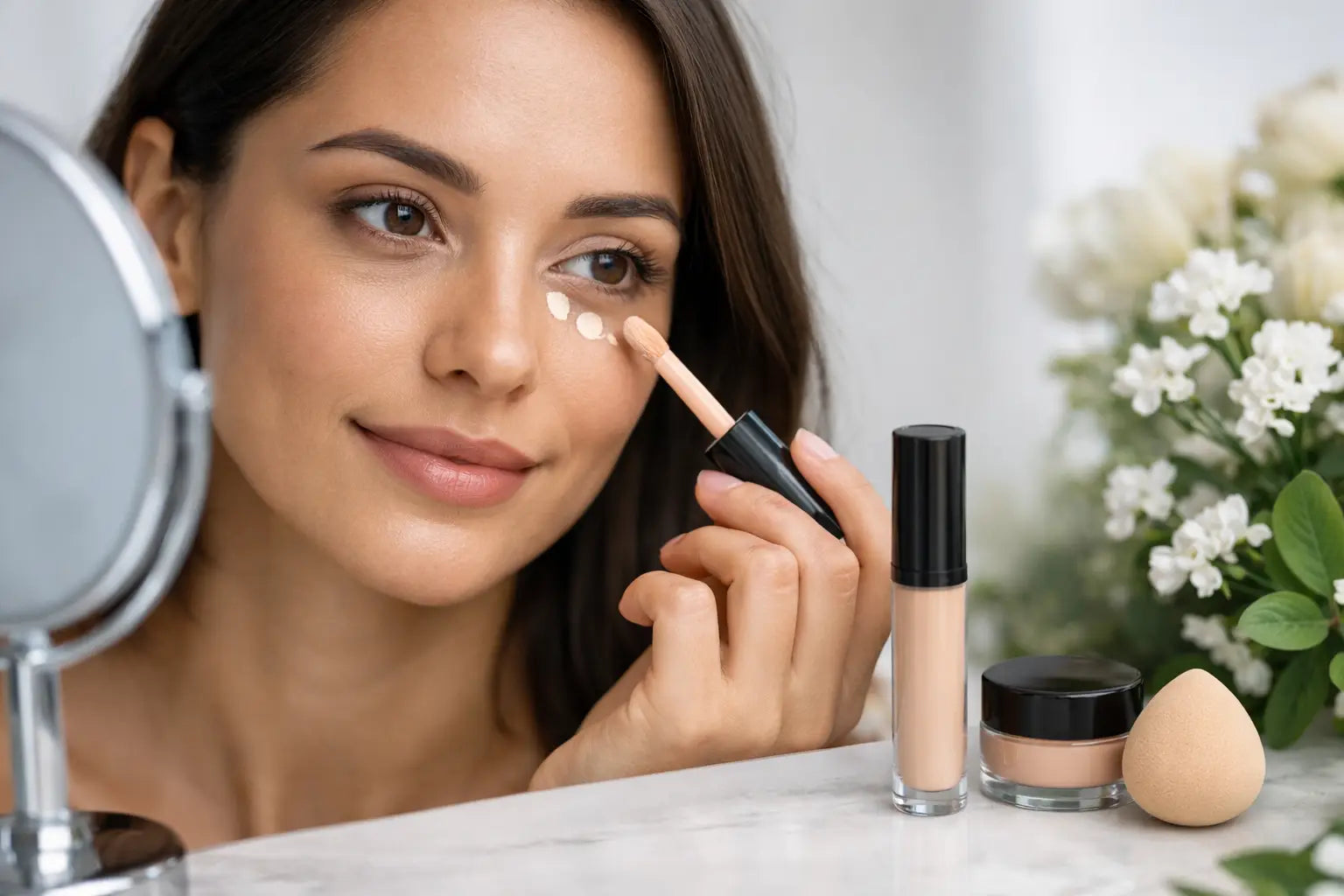
Next, apply your concealer in two or three tiny dots. Place one at the inner corner, one along the deepest part of the under-eye shadow, and one at the outer corner if needed. Tap, do not drag, until the product melts into the skin. The warmth of a fingertip can create a particularly skin-like finish, while a small fluffy brush offers precision around fine lines.
Avoid creating a large, bright triangle under the eye by default. This technique can look striking under studio lighting, but in real life it can make the under-eye appear dry, overly light or disconnected from the rest of the complexion. A softer, lifted placement is more refined: brighten the inner corner, follow the shadow, then blend slightly upwards at the outer corner.
Pause before adding more. Concealer often looks fuller in coverage after it settles for a minute. If a dark spot still peeks through, add another tiny layer only there. Thin layers outperform one thick layer every time.
Choose a Shade That Brightens, Not Bleaches
For dark circles, a concealer around one shade lighter than your foundation is usually enough. Going two or three shades lighter can turn blue circles grey, especially if the product lacks a peach or golden undertone. It can also emphasise puffiness by bringing it forward.
Your undertone matters as much as depth. Golden or olive complexions may find yellow-peach tones more flattering, while pink or neutral complexions may prefer a balanced peach. Test concealer by allowing it to sit on the skin for a few minutes. Some formulas oxidise slightly, and the right match should still look believable once it has set.
Set Only Where You Need It
Powder helps hold concealer in place, but too much is the fastest route to a dry, crepey-looking under-eye. If you tend to crease, use a clean fingertip or brush to gently smooth any lines before setting. Then press the smallest amount of finely milled loose or pressed powder into the areas that crease most.
Skip baking beneath the eyes, particularly if you have fine lines or dryness. A soft set is enough. If the under-eye looks flat after powder, tap a trace of concealer or hydrating complexion product back over the centre of the darkness for a fresh finish.
Why Your Concealer May Be Turning Grey
Grey under-eyes usually signal a colour issue, not a coverage issue. A very light beige concealer over blue or purple darkness can make the cool tones show through as ashiness. More product will only make the effect more noticeable.
Try a peach or apricot corrector under a concealer that closely matches your skin tone, rather than reaching immediately for a lighter shade. For deeper complexions, an orange or red-orange corrector may be needed, applied sparingly. The result should be neutral and bright, never visibly orange.
Another common culprit is applying concealer over dry skin. When product catches on texture, it can reflect light unevenly and make the under-eye look dull. Revisit your hydration step, use a more flexible formula and scale back the powder.
Make-Up Can Brighten, But It Is Not the Whole Story
Concealer is a brilliant confidence tool, but persistent dark circles can also be a cue to look at your broader routine. Dehydration, poor sleep, sun exposure, seasonal allergies and rubbing the eye area can all make darkness more apparent. Daily sunscreen around the orbital bone, gentle hydration and a consistent eye-care routine can support a brighter-looking area over time.
For mature skin, remember that changes in volume and skin thickness are normal. Make-up can soften the appearance of these changes beautifully, but trying to erase every natural contour often creates a heavier result. A luminous, strategically brightened under-eye tends to look more youthful than an opaque mask of coverage.
Mirenesse approaches complexion make-up with that real-life balance in mind: luxe clean beauty should perform beautifully, feel comfortable and let your own skin still look like skin.
The most flattering dark-circle routine is not about using the most concealer. It is about a hydrated base, the right undertone and precise placement. Give yourself permission to leave a little natural dimension behind - then let bright, rested-looking eyes do the talking.